 Fashion Jewellery Design
The fashion jewellery design process — from sketch to finished piece
Pencil on tracing paper — every professional piece starts as sketches that get narrowed down, not as a single lucky idea.
Professional fashion jewellery follows a process — not to kill creativity,
but to make creativity survive contact with the wearer. Here is the process
as taught in the JDMIS fashion jewellery programme.
Stage 1 — the brief and the wearer
Every serious design starts with a question: who wears this, where, with
what? A statement collar for a gala and an everyday stacked bracelet are
different engineering problems wearing the same word, "necklace".
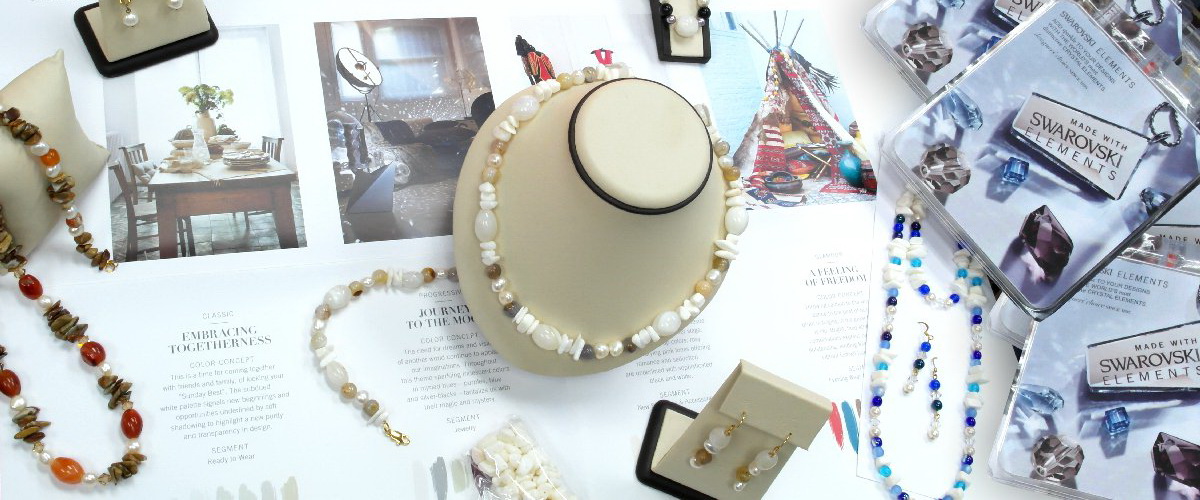
Stage 2 — research and references
Trend boards, material swatches, colour stories. Designers train their
reference discipline — the
trends course
turns this from instinct into professional habit.
Stage 3 — sketching and selection
Sketches resolve proportion and rhythm before materials get bought. Then
the honest part: choosing materials that match the sketch in weight, drape
and wear-resistance — the stage amateurs skip and professionals insist on.
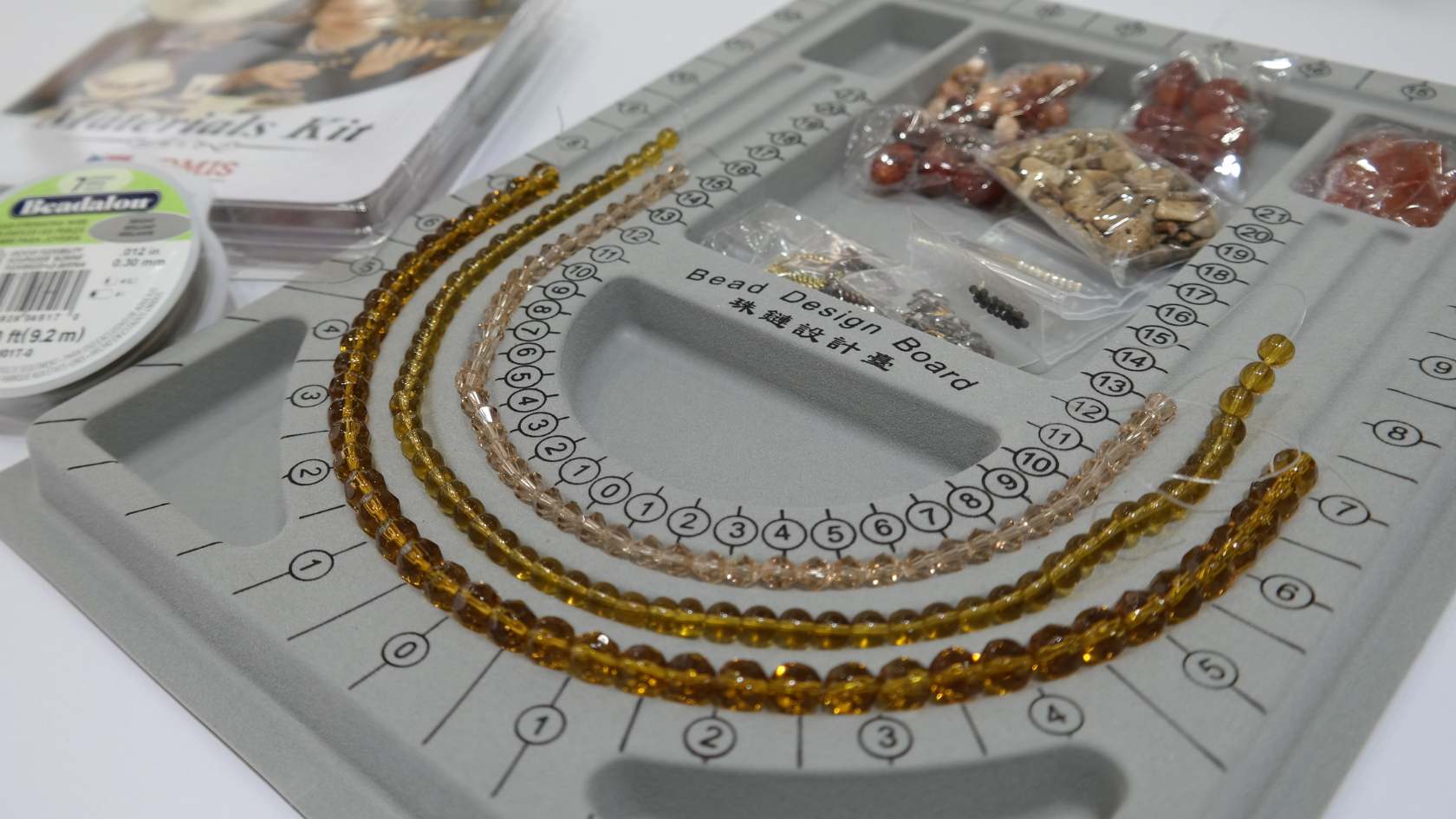
Stage 4 — assembly
The making plan: what gets strung, what gets woven, what gets wired, in what
order, with what terminations. Good assembly planning is why a designer's
piece survives a party and an amateur's does not.
Stage 5 — finishing and review
Final inspection against the brief: secure terminations, finished edges,
comfort on the body, and a photograph that tells the truth. In the diploma
programme, review means instructor assessment against professional standards —
the same bar a boutique buyer would apply.
See where the foundation courses
teach each stage, or skip ahead to the
one-day workshop and make your first
piece this month.
Questions people actually ask
Do I need drawing skills to design fashion jewellery?
Useful, not required — fashion jewellery is largely assembled rather than carved, so material and colour judgment carries more weight than rendering. Sketching is taught as part of the process.
How long does a professional piece take from idea to finished?
A simple strung piece can be designed and made in a session; complex woven or wired showpieces take days. The design process is the same at both scales.
Is the process different from fine jewellery design?
The skeleton is the same — brief, research, sketch, materials, make, review. Fashion jewellery adds fast iteration: cheaper materials mean bolder experiments.
What students say
“I am using the skills in my everyday life and my spare time has become very productive.”
— Shirley M. (Philippines) · published student feedback
“The skills learnt help me in choosing my purchases. I may consider helping a relative in the jewellery business and get included in the exhibitions.”
— Joyce T. (Singapore) · published student feedback
Free ways to explore
No sign-up, no payment — start with any of these.
Every course, family and diploma in one PDF.Play Name That GemFREE
The school's free gem-identification game — train your eye.Free gem webinar replaysFREE
Full recorded sessions on gems and the jewellery trade.Take the 2-minute course finderFREE
Answer a few questions, get personal course recommendations.
Explore the Fashion Jewellery Arts diploma
A structured path from first sketch to professional finishing — taught hands-on in Singapore by JDMIS.
Visit jdmis.edu.sg